
Pickle That Garlic Before it Goes Bad
Is your garlic looking a little worse for wear this time of year? Before nature turns your precious stash of garlic gold into paper husks, try making these easy refrigerator pickled garlic cloves.
Is your garlic looking a little worse for wear this time of year? Garlic bulbs know that spring is right around the corner, and even those stored in a cool, dry place might be starting to sprout, mold, or turn to dust. Before nature turns your precious stash of garlic gold into paper husks, try making these easy refrigerator pickles. That way, you can enjoy fresh garlic through the spring as you wait for the new crop to be ready.
The most time-consuming part of pickling garlic cloves is peeling all of that garlic at once. If you're fast with a knife, you can peel each clove individually. Otherwise, I recommend trying the Martha Stewart method, which is to separate the cloves, put them in a metal bowl, invert another metal bowl on top of the first, and shake the heck out of the cloves. After 10 seconds of shaking, the cloves should slip easily from the peels. I find that this method works better with large cloves, like she uses in the video, and not so well for small home-grown garlic cloves. Try it and see how you fare.

the smallest of our homegrown garlic
Pickled Garlic Ingredients:
garlic cloves
apple cider vinegar
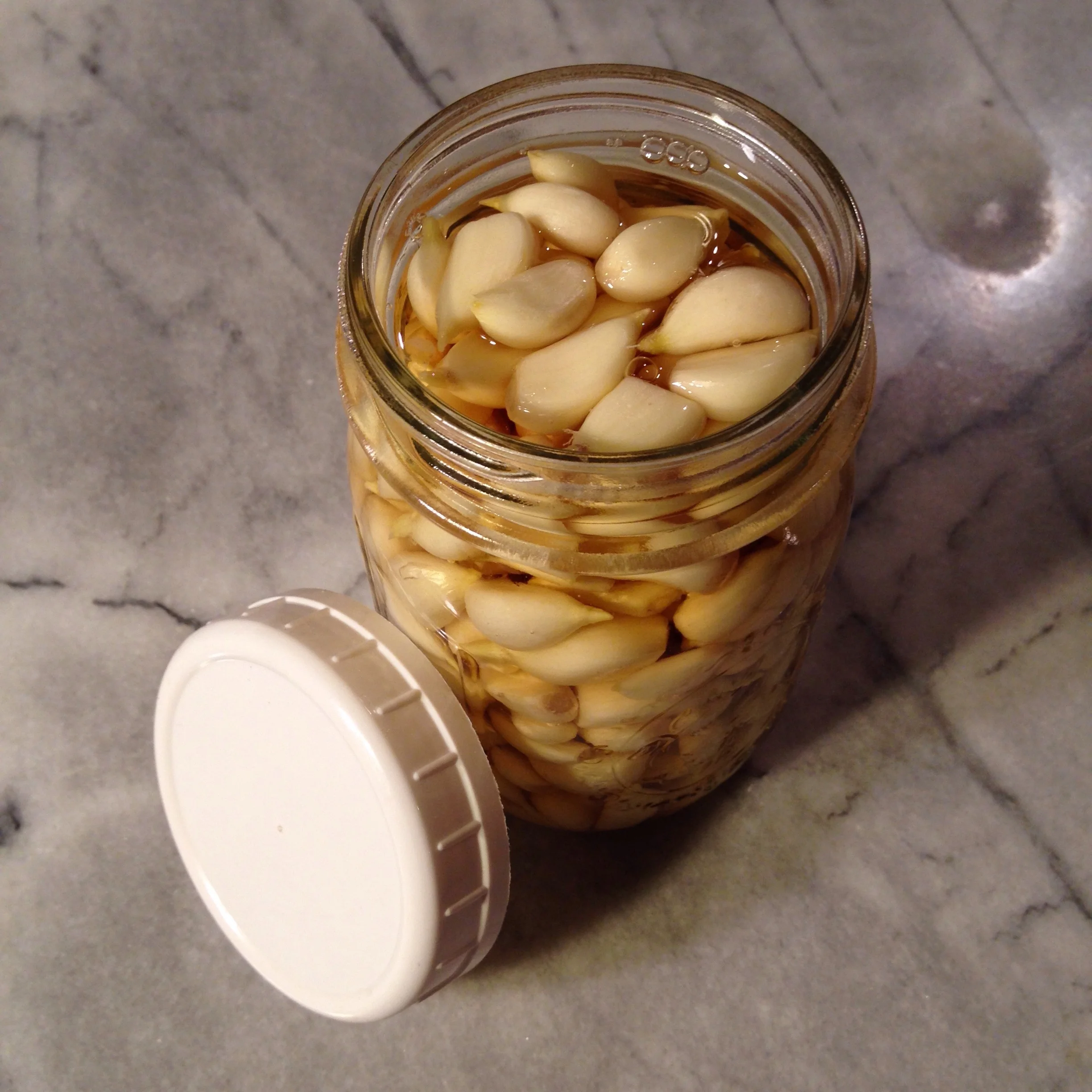
Once the cloves are peeled, fill a glass jar with the garlic. Then pour apple cider vinegar over the cloves, filling the jar. Cover the jar with a non-metallic lid (I use plastic Ball lids). Store pickled garlic in the fridge, or follow the Ball Blue Book recipe to water bath can pickled garlic.

all the tiny cloves are peeled
The cloves can be used immediately, though they keep for at least a year in the fridge, their taste mellowing with time. The vinegar itself is delicious after a few weeks and can be added to salads, cooked greens, or any meal that benefits from a pungent garlic flavored vinegar.

ready to go in the fridge
This is also the method I used to preserve a pint of wild ramps that I was given by a friend last spring. It worked beautifully, and I am still savoring the last of the small bulbs in special meals.
Easy Wooden Spoon Care
I love my wooden spoons and spatulas. Some were handed down from my grandmother's kitchen and others were recent, thoughtful gifts. Every few months, when the wood begins to dry out and the spoons look dull and over-used, I take the time to coat them in oil.
I love my wooden spoons and spatulas. Some were handed down from my grandmother's kitchen and others were recent, thoughtful gifts. Every few months, when the wood begins to dry out and the spoons look dull and over-used, I take the time to coat them in oil. Oiling wooden utensils helps to protect them from splitting or absorbing ingredients, as well as giving them a beautiful glow and a soft feeling in your hand.

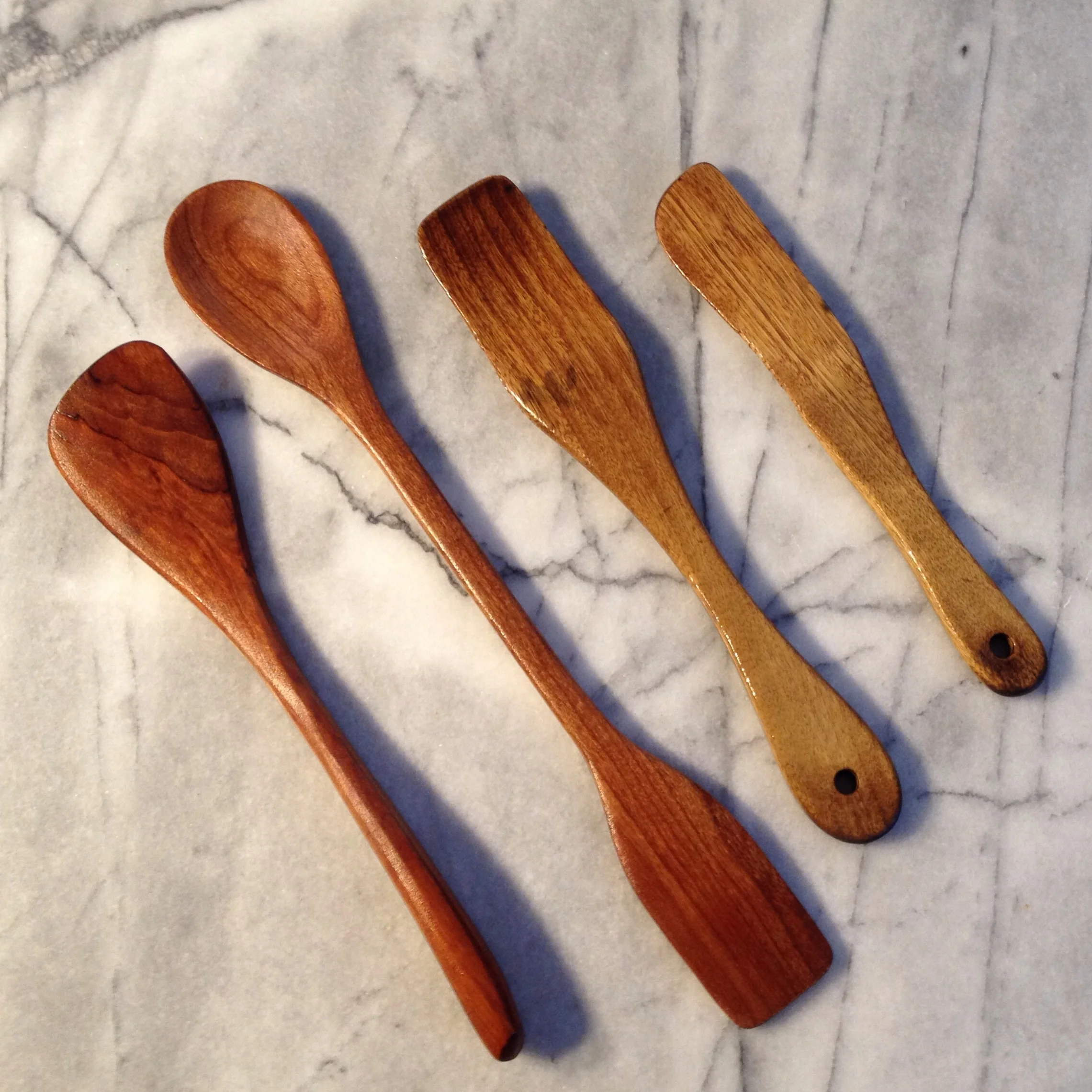
dry wooden spoons waiting for some tender loving care
Much has been written about oiling wooden spoons, and while the general consensus is to use mineral oil instead of cooking oil, I choose to use olive oil for the job because it isn't made from petroleum products and it's already sitting on my counter, ready to use. I have also used coconut oil, though I live in a cold climate where coconut oil solidifies most of the year, so it is easier to use olive oil on my wooden spoons. I have also heard good things about using walnut oil because it dries like linseed oil and protects the wood better, so you might want to try that if you have some in your kitchen already. Otherwise, just use olive oil.

To oil, simply drizzle a small amount of olive oil on your spoon and rub in with your hands. Once the oil has soaked into the wood, you can wipe the extra oil off the spoon and rinse if you want to, though I usually just put them away. Sometimes I let the spoon sit for a few minutes and then add a second layer of oil.

spoons oiled and ready for another few months of cooking
Beyond oiling, I give my wooden spoons very little special care, although I use them all the time. I don't put them through the dishwasher (because I don't have a dishwasher), and I don't leave them soaking in water in the sink overnight. Just use, soak briefly if needed, wash and air dry -- simple!
A Walk in the Suburbs
As soon as the sun begins to get brighter, it always feels good to get moving outside, even if it's still cold, though this week has been unseasonably warm. Today, there were signs of life as the birds sang and the squirrels chattered, and a few hardy plants showed their leaves.
While visiting friends in New York, I've been taking quite a few late-February walks around the neighborhood with the little dog. We are good wandering companions, as she stops every so often to sniff, and I stop every so often to gaze at greens and trees. We understand each other.
As soon as the sun begins to get brighter, it always feels good to get moving outside, even if it's still cold, though this week has been unseasonably warm. Today, there were signs of life as the birds sang and the squirrels chattered, and a few hardy plants showed their leaves.
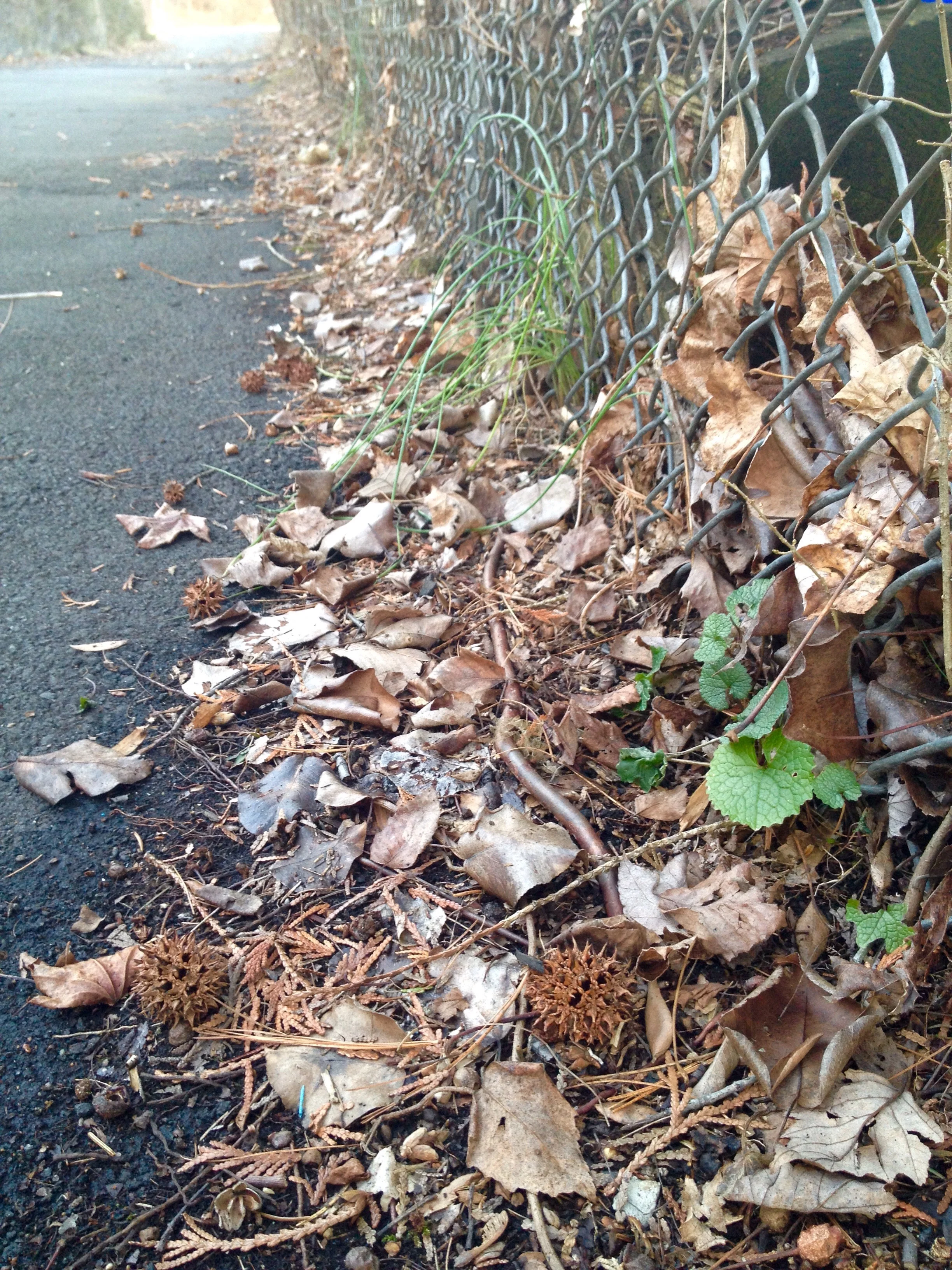
Here's a shot with sycamore pods, wild onions, and the smallest garlic mustards just coming up. The greens already taste like garlic (yum!), though there weren't enough to harvest, and this wasn't a safe place to do so anyway. Garlic mustard is a particularly wonderful early green, if you can find it. In many parts of the Northeast, it grows rampant through the edges of the woods, growing tall and flowering white later in the season. The young leaves are best cooked like spinach before the plants flower, and there's no need to season them, as they carry their own garlic flavor.
The downside of this plant being considered a noxious weed is that people have a tendency to spray herbicide on the plants to fight the spread, so we must always be careful where we harvest. Also, although they smell wonderful, eat only a small amount at first, as any new food could cause adverse reactions. Upon my first harvest of garlic mustard, I ate an entire bowl of the steamed leaves and felt rather ill afterwards. I still pick them as a trail nibble and try to appreciate the use of an otherwise notorious "weed."

After a slow trip through an overgrown lane, we came upon these two gorgeous trees. I'm pretty sure they are shagbark hickories, as I found thick nut husks underneath and the bark is very shaggy. A hearty "thank you" to whatever soul planted these beauties so long ago for us to now enjoy. Someone once said "the best time to plant a tree is twenty years ago." That goes double for nut trees. If you want to make a difference for decades to come, plant a nut tree yesterday.

Happy wandering!










Natural Protection for the Outdoors
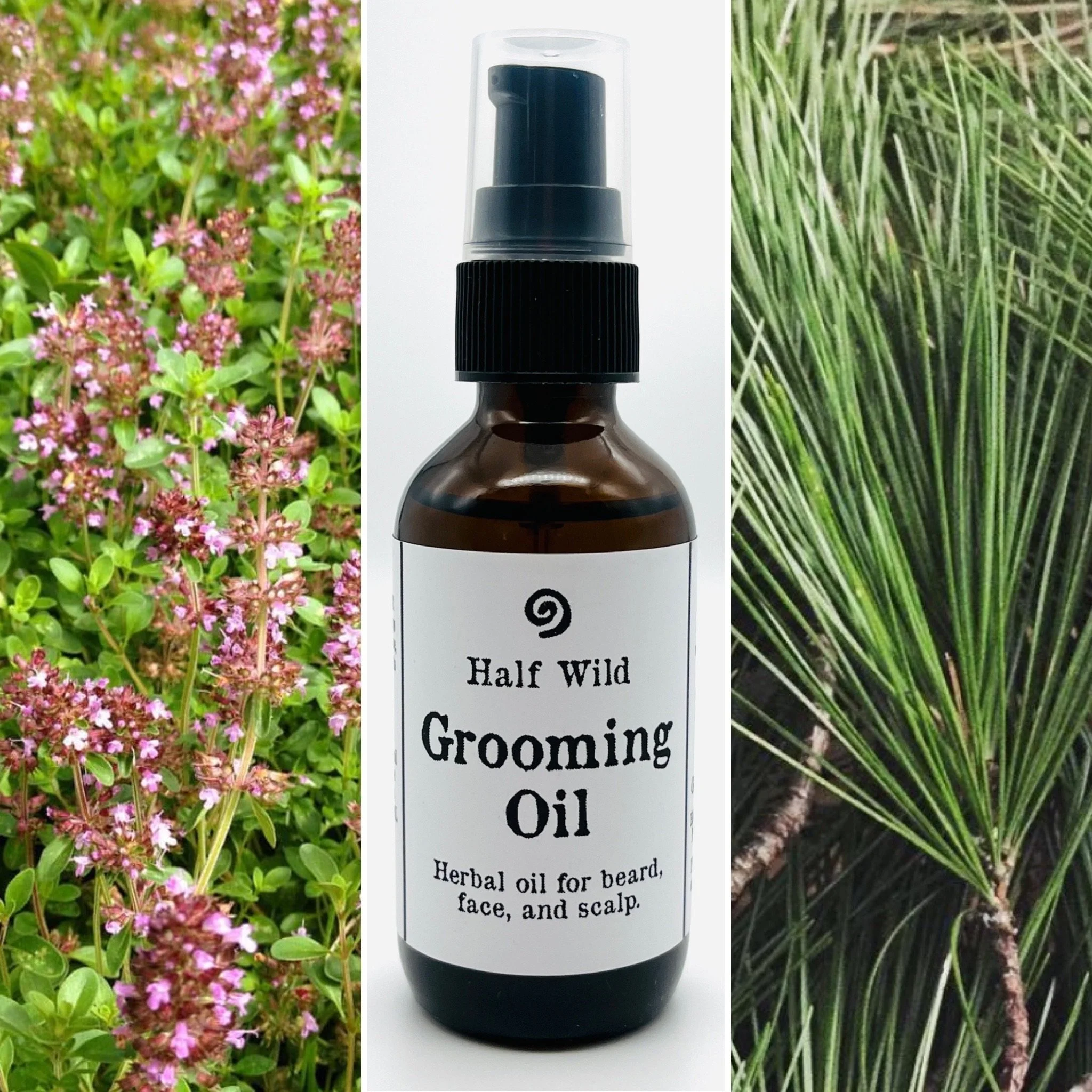
Herbal Bug Spray is a refreshing, herb-infused mist designed to keep your comfortable during your time outdoors. Made with thyme and other herbs grown on our farm, this formula is thoughtfully crafted to help you enjoy nature without unwatned distractions. Light and easy to apply, it is perfect for hikes, picnics, or any adventure under the open sky.
Best For: Outdoor Adventures, Hiking, Gardening, Camping
Not for use on pets.
This 56 mL bottle comes with a treatment pump that can be refilled twice with our Herbal Bug Spray Refill.
We offer sliding scale prices. Please select an option below to support our small business at a price that matches your ability to pay.